






Cybersecurity Career in the Age of Artificial Intelligence: A Shield Against Threats, A Gateway to Opportunities
Today’s digital world is like a battlefield filled with rapidly increasing and complex cyber threats. From companies to governments, individuals to institutions, everyone has become a target of these threats. This dynamic and challenging environment in the field of cybersecurity clearly demonstrates that traditional defense methods alone are not sufficient anymore. At exactly this juncture, Artificial Intelligence (AI) technologies emerge as both a solution partner and an exciting, opportunity-rich career path for cybersecurity professionals.
How does AI’s increasing role in cybersecurity positively impact those considering a career in this field? This transformation makes cybersecurity careers more attractive and strategic in several ways.
AI’s Transformative Role in Security: Creating New Specialties
Artificial Intelligence has revolutionized cybersecurity applications, opening the door to more proactive and adaptive defense mechanisms. This transformation has created new specialties for professionals who will establish, manage, and develop AI-powered security systems.
Advanced Threat Detection and Analysis: AI-powered systems can analyze large datasets in real-time, quickly identifying complex attacks and anomalies that traditional methods might miss. Not only does this simplify the work of security analysts, but it also increases demand for professionals with skills in understanding AI algorithms, training models, and interpreting AI-generated insights. Machine learning algorithms provide proactive defense by learning from past attack data and addressing new and emerging threats.
Intelligent Automated Response: AI offers the capability of autonomously responding to incidents, helping to contain threats before they spread. This automation reduces response times for security teams and creates a need for professionals specializing in designing, configuring, and monitoring automated response systems.
Behavioral Analysis and Anomaly Detection: AI can recognize normal behavior patterns of users and networks, gaining the ability to detect suspicious deviations. Security experts in this field need skills to set up behavioral analysis models and investigate anomalies flagged by AI in-depth.
Predictive Analytics: AI can analyze historical data to predict potential vulnerabilities and risks. This enables security teams to take proactive measures while opening new roles for cybersecurity professionals with skills in data science and predictive modeling.
New Threats and Challenges Introduced by AI: The Basis for Increased Demand
AI is not only used in defense but is also increasingly employed by cyber attackers. With AI, attacks become more efficient, effective, and convincing. It allows individuals with little to no coding knowledge to conduct attacks, enabling the rise of advanced phishing schemes and deepfake attacks. The speed at which threat actors identify weaknesses creates a need for new security capabilities, especially at endpoints.
These new threats and challenges introduced by AI significantly increase demand for experts in the cybersecurity field. Fighting against these complex and constantly evolving threats requires human expertise capable of effectively using AI tools and developing new strategies.
Additionally, ensuring the security of AI systems and the sensitive data they generate has become a security necessity in itself. Specialists in AI security will be needed to protect systems like AI PCs or LLMs (Large Language Models) from privacy breaches and data theft. The increasing prevalence of IoT devices and their security vulnerabilities also opens doors for professionals specializing in areas like hardware-assisted security and Zero Trust architecture.
Tangible Advantages of AI for Cybersecurity Careers
AI has the potential to improve career satisfaction for cybersecurity professionals by making daily work more efficient and strategic.
Increased Efficiency and Strategic Focus: AI’s ability to automate routine tasks (such as daily analysis and vulnerability scanning) allows security experts to concentrate on more complex, analytical, and strategic tasks. This reduces workload and provides more fulfilling job responsibilities.
Reduction in Human Error: Human error, one of the leading causes of cybersecurity breaches, can be minimized with AI and automation. This allows security professionals to focus on developing defense strategies rather than handling system errors.
Faster and More Accurate Threat Analysis: AI-powered tools process large data sets rapidly, generating actionable insights. This helps professionals identify threats faster and more accurately.
Support in Software Security: AI can assist in code production and vulnerability detection, making it easier for developers to create secure software while also enabling security professionals to integrate more closely into these processes.
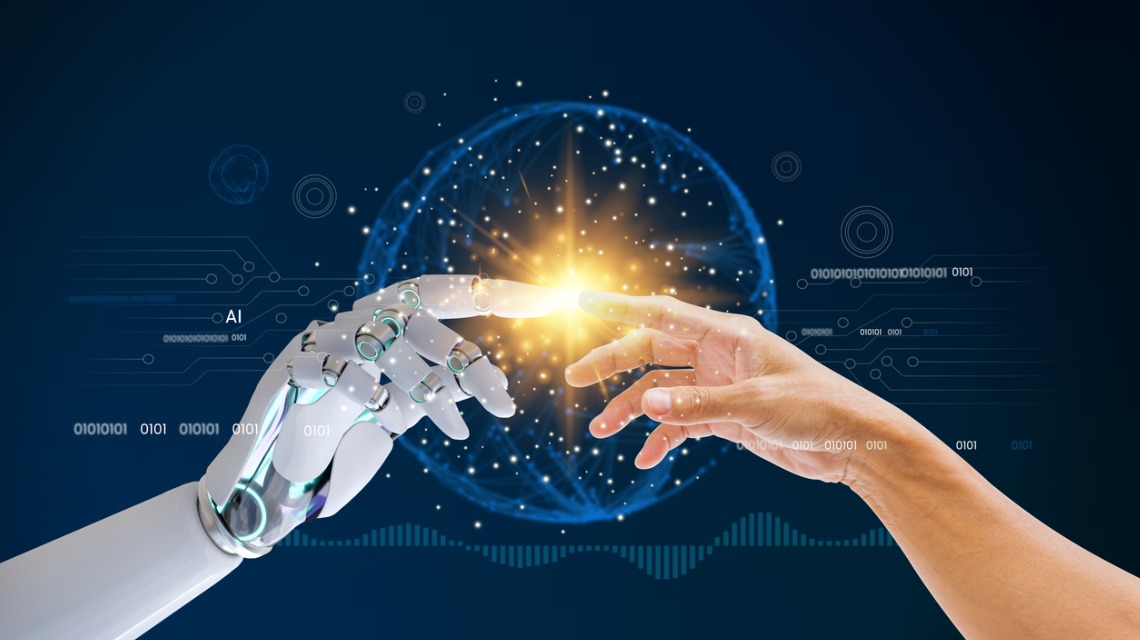
The Indispensability of Human and AI Collaboration: The Growing Value of Human Expertise
Experts emphasize that Artificial Intelligence (AI) is not a magic wand and must be combined with human expertise to achieve the most effective results. While AI excels in data processing, speed, and automation, skills such as strategic thinking, nuanced decision-making, ethical judgment, creativity, and critical analysis remain unique to humans.
This collaboration does not eliminate the role of cybersecurity professionals but elevates them to more critical and managerial positions. It is the responsibility of human experts to interpret AI insights, create strategic defense plans, and adjust tactics against evolving threats. This makes a cybersecurity career even more valuable and future-proof in the age of AI.
Conclusion
AI is revolutionizing the field of cybersecurity and offers unique opportunities for those looking to build a career in this domain. While the new threats brought by AI increase the demand for cybersecurity professionals, AI’s defensive capabilities enable professionals to work more efficiently, strategically, and with greater focus. Individuals who understand AI systems, collaborate with them, and possess the critical thinking, ethical understanding, and strategic vision required by human intelligence will play key roles in the future of AI-driven cybersecurity.
This demonstrates that cybersecurity is not only in need of a growing workforce but is also emerging as an attractive career path for professionals who are intertwined with technology, capable of continuous learning, and highly adaptive. AI is becoming less of a threat and more of an ally for professionals in their mission to protect the digital world.
If you are considering a career in cybersecurity, the OAK Academy Cybersecurity Engineering Course is perfect for you.
The new threats and challenges created by AI will dramatically increase the demand for experts in the field of cybersecurity.
Related Posts

The Best Online Learning Platforms
- May 22, 2023

Career in Cybersecurity
- June 17, 2025

How to Boost your Linkedin Profile?
- May 16, 2025